Let's sketch people!
This was originally presented as a workshop at UXCamp Boorloo Perth 2026. I asked people to draw along with me, and encourage you to do the same!
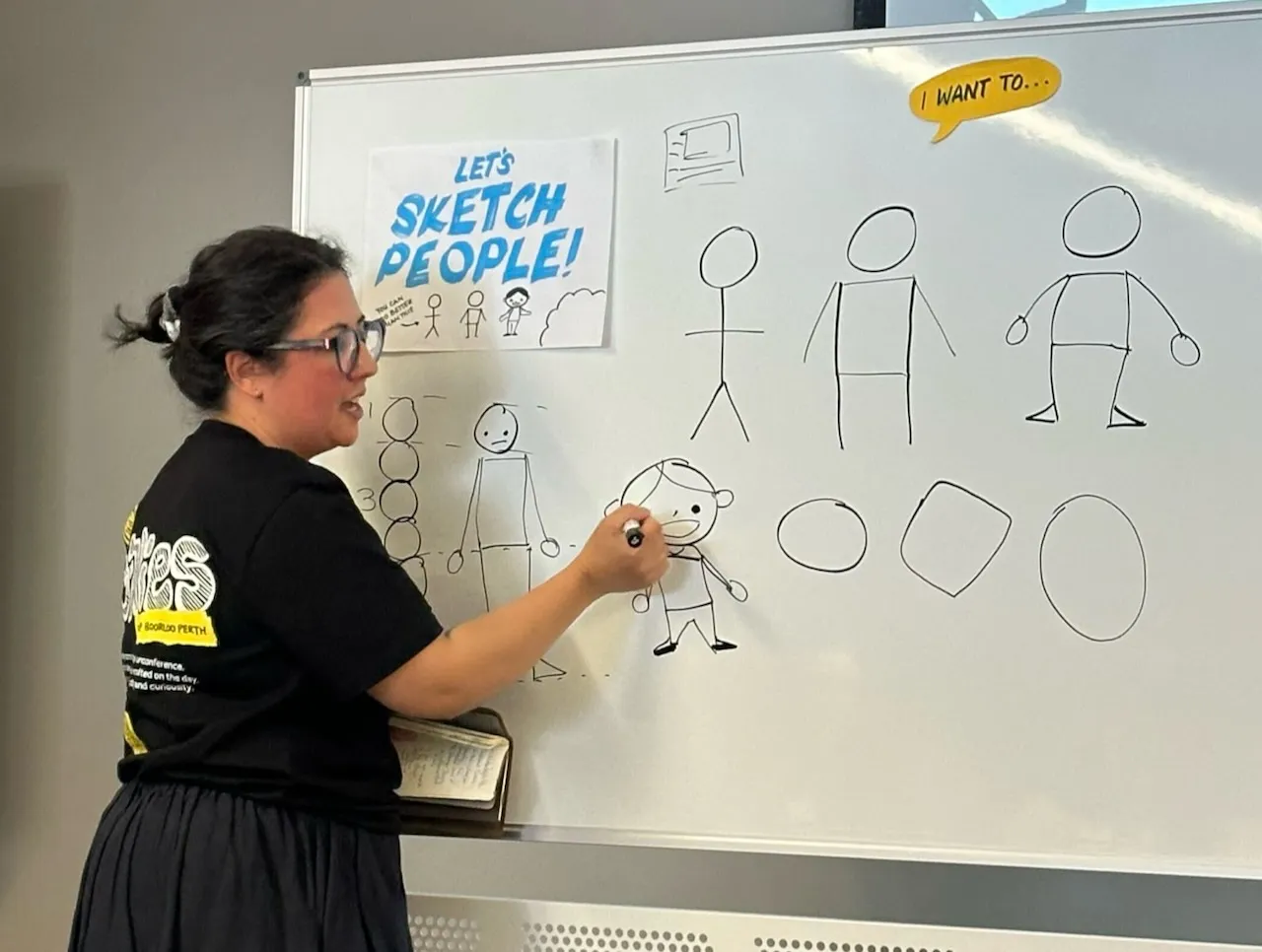
Think you can only draw stick figures? This one is for you!
There's nothing wrong with stick figures exactly (I love xkcd!). But if you want to add a bit more expression and movement to your sketches, there are some simple things you can do to level them up.
Level up your stick figures with simple shapes
The simplest thing you can do is to use a geometric shape like a rectangle to represent the body. This gives something to hang the arms and legs from, rather than directly coming off of the spine, which makes more poses possible.
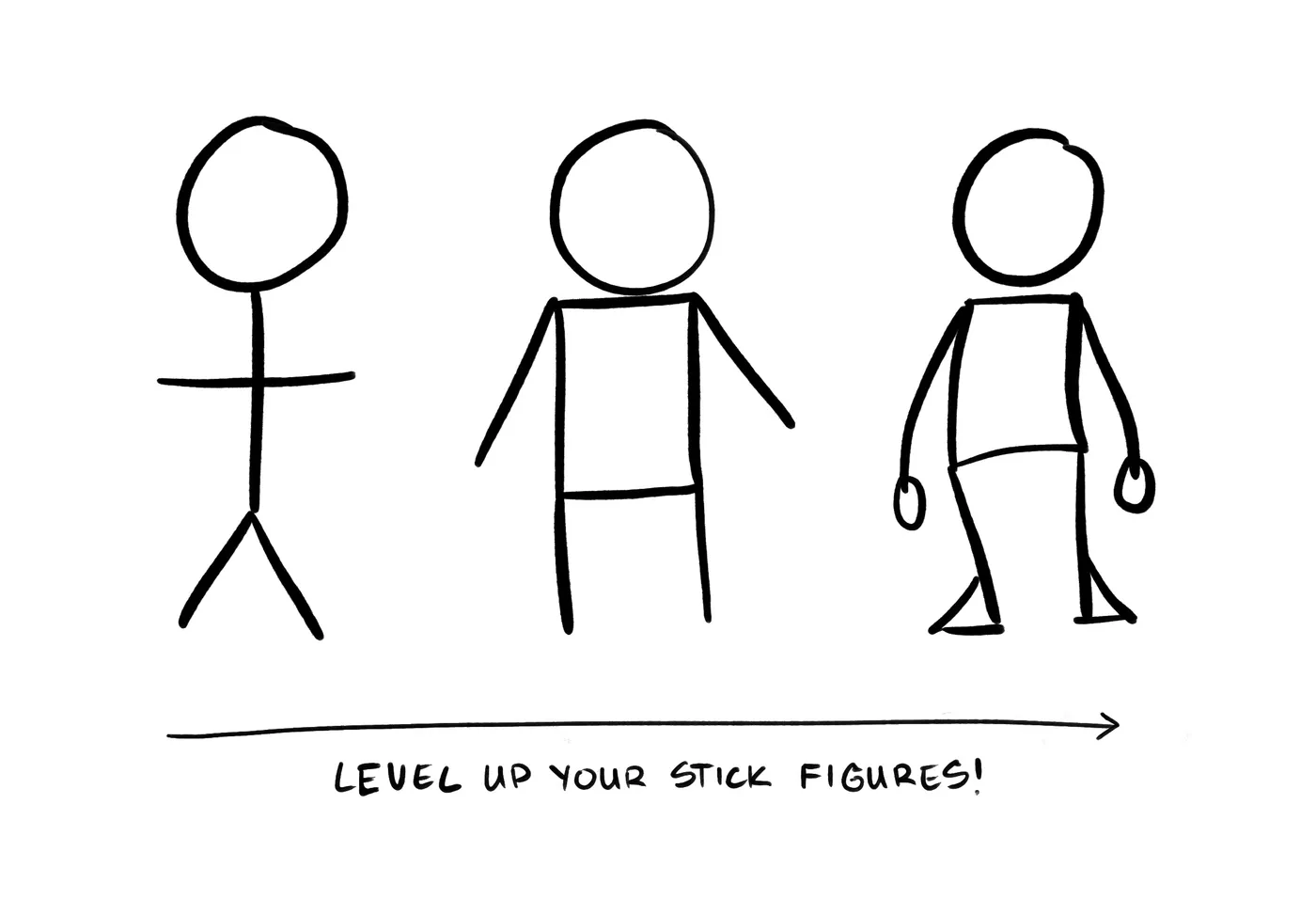
Stepping up again, you can make your lines more expressive with slight curves and a few more shapes for feet and hands. These extra bits of information can help you capture even more emotion and action - still just with geometric shapes and curved lines.
Choose proportions wisely
Many "how to draw" tutorials and books will reference the seven heads proportions, where the head to full height ratio is 1:7, with the body and legs 3 heads in length each. This is intended for an idealised human figure, and can be a useful guideline when drawing people to look realistic.
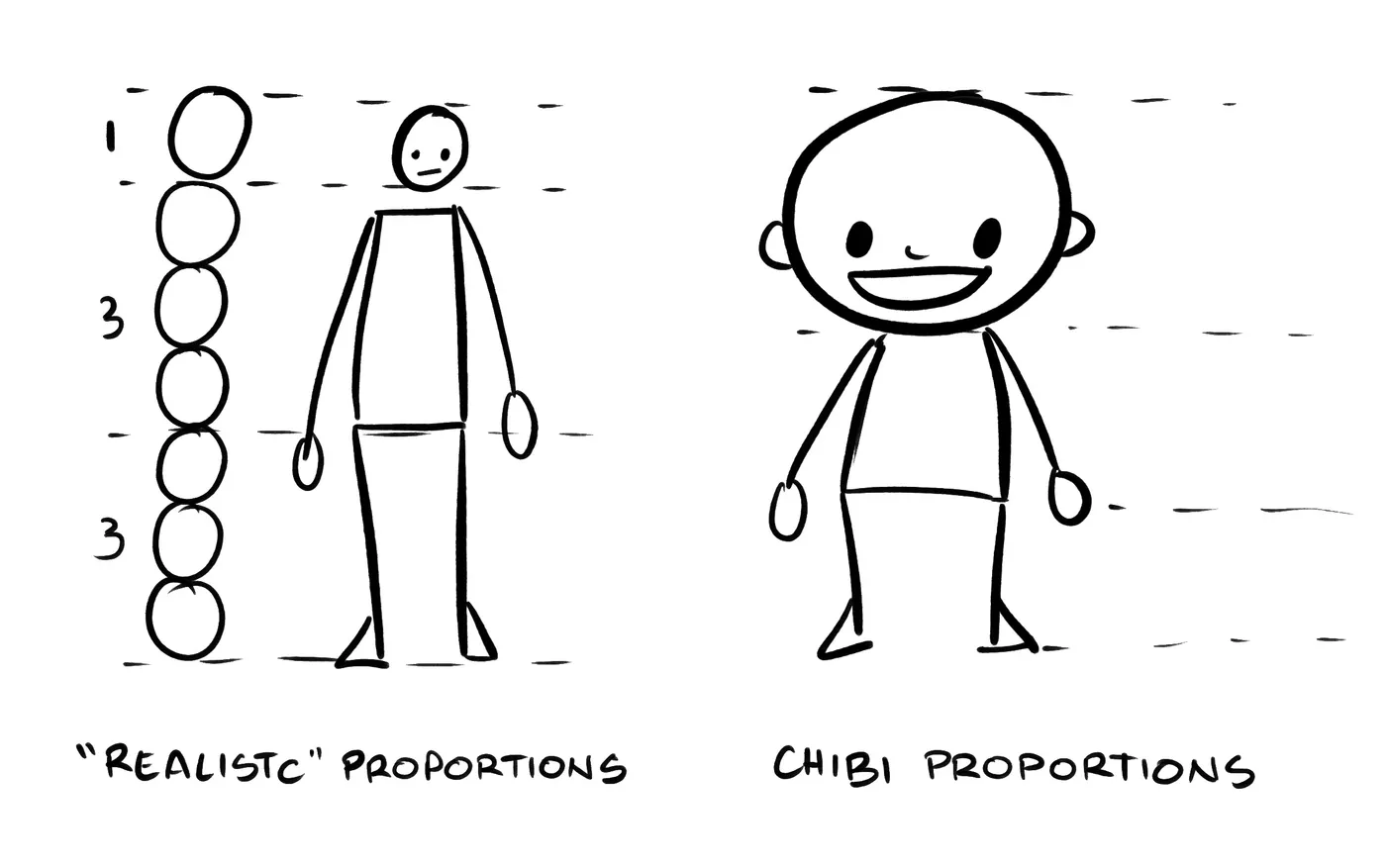
For sketching to get across ideas or emotions though, I find these proportions a bit too serious and without enough space to draw much of a face.
Instead I like to sketch with cartoony, chibi proportions - a massive head that I can draw a big expressive face on, with a comparatively small body and legs. I find this gives me maximum room for facial expressions and minimum pressure for any realism, as it's clearly a cartoon person.
More on (cartoony) faces
Since I'm not concerned with being too realistic or serious, any shape can be a head - so don't worry if your circles are wonky! Humans are wired to recognise facial expressions even where none exist, so a weird shaped head will probably still read as a head.
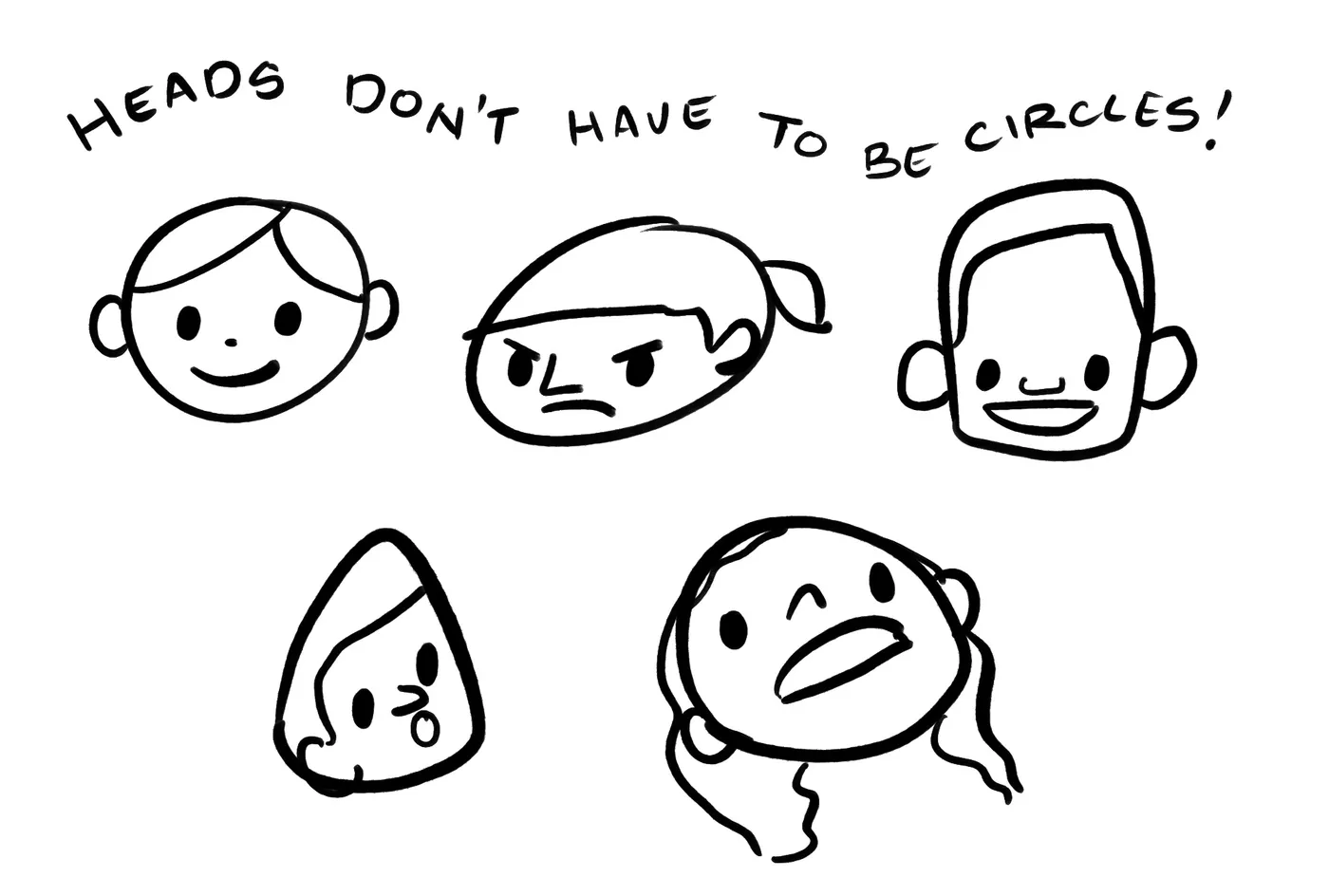
I like to use simple oval eyes, minimal noses and mouths, and simple ears and hair. Think emoji faces but with ears (the ear placement compared to the eyes/nose can give clues to the angle of the face, so can be useful to include). I don't always bother with eyebrows but for some expressions (anger, fear) they can really help.
Try sketching faces using different base shapes, eye placement and hairstyles!
Some simple poses
Here are some simple poses you can try. These are are quite simple, front-on poses but hopefully give you some ideas of elements that you can mix up to express different things. For figures to include in sketchnotes or describe a user flow, they don't need to be complex or realistic. Used in context with words, even simple hand-drawn sketches like these can be powerful.
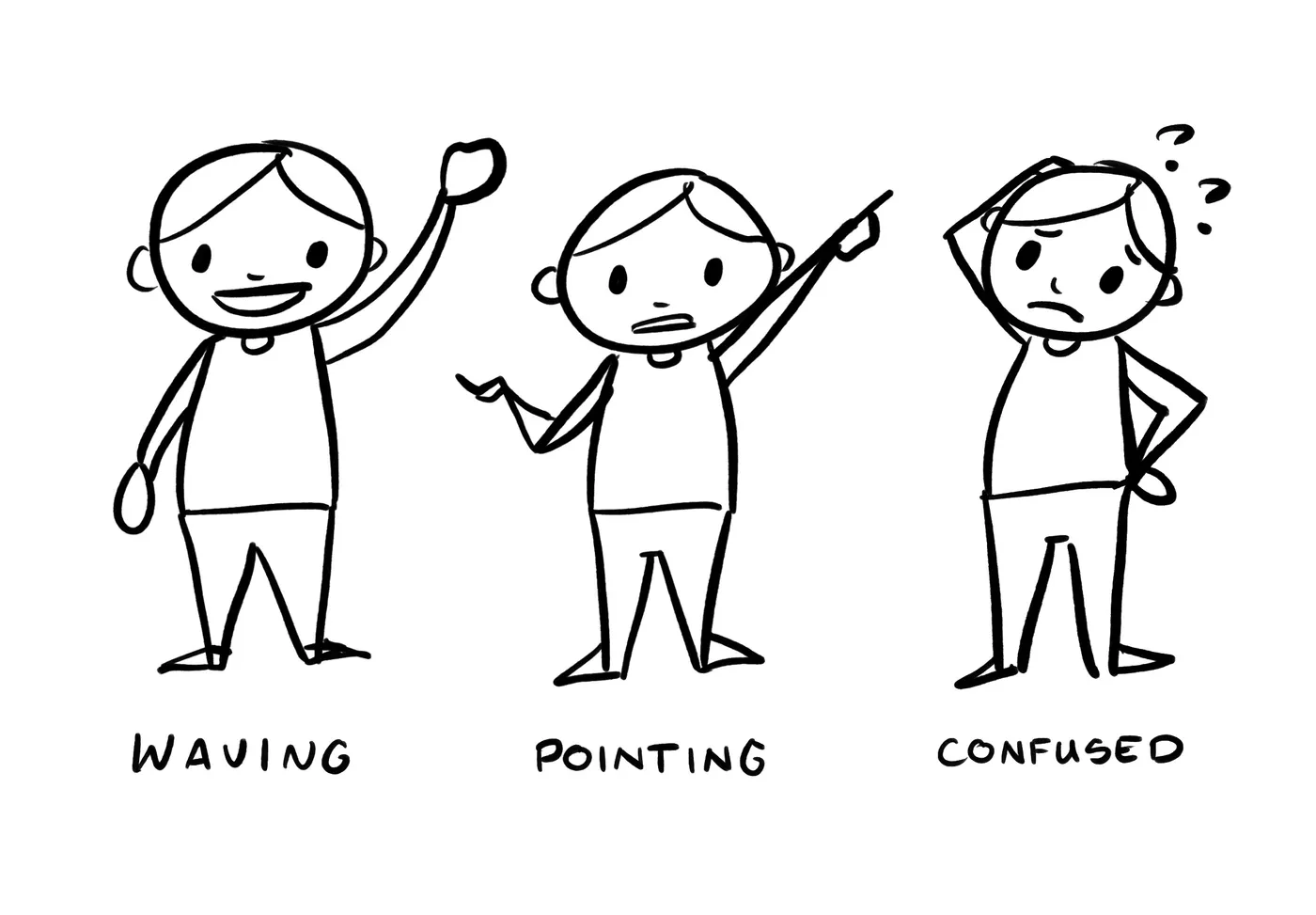
To go from the boxy levelled-up stick figure to something like this, try giving some width to the arms and legs, and hinting at a neckline and clothing. And of course a big facial expression. That's it!
If you want to push poses further, try some of these ideas:
- looking at a mobile phone
- walking/running
- holding up a giant sign
- lifting something heavy
- two people talking
Tools
I made the drawing on this page using Procreate and an Apple Pencil on my iPad Air, but the workshop is demonstrated live with a good old whiteboard and markers. You'll be using Crayola markers, so you don't take it all too seriously.
Further learning
- A simple & powerful exercise for sketching people | Draw stick figures in a whole new way - YouTube - excellent video by artist Alphonso Dunn that goes much further than my workshop with creating depth and expressive poses.
- A quick beginner’s guide to drawing - Ralph Ammer - general drawing article with lovely animations, not specific to figures.
- Presto Sketching by Ben Crothers - the book I immediately opened when thinking about how to help people sketch people
About Teresa
I'm a part-time UX Design Lead at Moodle, part-time artist living in Boorloo, Perth. You can read more about me here.

Want to talk to me more about sketching?
If you're interested in commissioning a sketch or bringing someone in to lead a workshop on sketching in your work place, please get in touch! My email address is teresawatts@gmail.com
